 Chiral Accountants
Running Your Business: What to Do and What to Avoid
The day-to-day habits, ongoing tasks and annual deadlines that keep your business on the right side of HMRC and Companies House, and keep tax bills from catching you out.
This guide covers the basics every business owner should know. It can't cover every situation, so if something here doesn't seem to fit your business, or you're not sure, ask us before you act. Sections that only apply to limited companies or employers are marked, so you can skip what doesn't apply to you.
The Golden Rules
If you only read one part of this guide, make it this one. Most problems we see come from one of these.
Do
- Use a separate bank account for the business.
- Issue an invoice for every sale, and keep a copy.
- Keep a receipt or invoice for every business purchase.
- Set money aside for tax and VAT as you go, not at the end of the year.
- Keep a mileage log if you claim for business journeys.
- Send us any HMRC or Companies House letters as soon as they arrive.
- Talk to us before big changes, like taking on staff or buying a vehicle.
Don't
- Pay personal costs from the business account.
- Take money out of a limited company without knowing whether it's salary, a dividend or a loan.
- Treat VAT, or tax deducted from your employees' pay, as money you can spend.
- Claim your normal commute as business mileage.
- Ignore letters from HMRC or Companies House.
- Reply to emails, texts or calls claiming to be HMRC that ask for bank details or promise a refund. They're usually scams.
- Throw away records before the retention period ends.
Money In and Money Out
Keep Business and Personal Money Separate
Run everything for the business through a dedicated business bank account, and keep personal spending out of it. It makes your records accurate, makes your bookkeeping quicker and cheaper, and makes it far easier to show HMRC what's business and what isn't. A limited company must have its own account, because the company's money legally belongs to the company, not to you.
If a personal cost does go through the business account by mistake, or you pay a business cost personally, just tell us so we can record it correctly.
Sales Invoices
Issue an invoice for every sale. Number your invoices in sequence, without gaps, so every sale can be accounted for. Every invoice should show:
- Your business name, address and contact details
- Your customer's name and address
- A unique, sequential invoice number
- The invoice date, and the date the goods or services were supplied
- A clear description of what you're charging for
- The amount for each item, and the total owed
- Your payment terms and bank details
Limited Companies Must Also Show
- The company's full registered name
- The company registration number
- The registered office address
- Where it's registered, e.g. England and Wales
VAT Registered? Also Show
- Your VAT registration number
- The VAT rate and VAT amount
- The total excluding VAT
If you take cash, record your cash sales too. A daily till summary (Z-read) or takings sheet is enough, as long as it matches what you bank.
Purchases and Receipts
Keep an invoice or receipt for everything you buy for the business, whether it's paid from the business account, by card or from petty cash. A bank statement line on its own doesn't show what was bought. Take a photo of paper receipts and send them to us; you don't need to keep a shoebox.
Where you buy business and personal items in the same shop, ask for separate receipts, or pay for them separately. A receipt that mixes the two makes it hard to show which part was for the business.
Business Mileage
If you use your own car or van for business journeys, you can claim a flat rate per mile instead of the actual running costs. From 6 April 2026, HMRC's rates are:
Cars and Vans
55p per mile for the first 10,000 business miles in the tax year, then 25p per mile after that.
Motorcycles and Bicycles
24p per mile for motorcycles and 20p per mile for bicycles, however many miles you travel.
- Limited company: the company pays you back at these rates and claims the cost as a business expense. The rate covers fuel and wear and tear, so the company doesn't also pay for your fuel.
- Sole trader: you can claim these rates as a business expense instead of your actual vehicle costs. Once you've chosen a method for a vehicle, you must stick with it for as long as you use that vehicle in the business.
Keep a Log of Every Journey
- Date of the journey
- Starting and ending postcode
- Reason for the journey
- Number of miles travelled
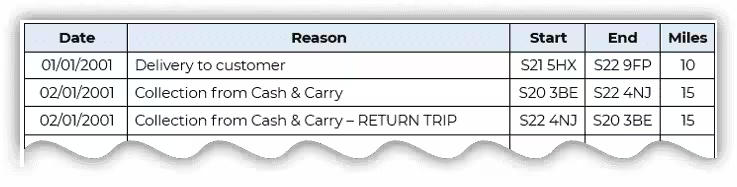
Your normal commute doesn't count. Travelling between home and your regular place of work isn't business mileage, even if you take work calls on the way.
Send us a summary of your mileage claim after the end of each month. You keep the detailed log yourself, in case HMRC ever asks to see it.
Setting Aside Money for Tax
The simplest way to avoid a tax bill you can't pay is to move money into a separate savings account every time you're paid, so it isn't sitting in your main account looking like money you can spend.
VAT (If You're VAT Registered)
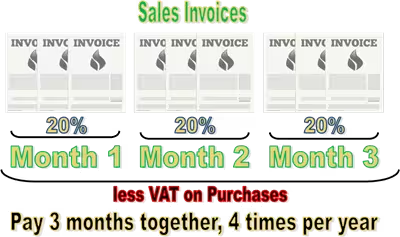
The VAT you charge your customers isn't your money. You're collecting it for HMRC and you have to pay it over. Set aside the VAT on every sale as the money comes in. At the standard 20% rate, that's one sixth of a VAT-inclusive total (for example, £20 out of every £120 you receive). VAT you pay on business purchases reduces your bill, so setting aside the full amount means you'll always have enough.
Most businesses send a VAT Return every 3 months. The return and payment are due 1 month and 7 days after the end of each period. We'll prepare your return and ask for your approval before we submit it; you then pay HMRC. Setting up a Direct Debit through your HMRC online account means you won't miss a payment.
Not VAT registered yet? You must register if your VAT-taxable turnover goes over £90,000 in any rolling 12 months, not just your financial year. Keep an eye on it, and tell us as soon as you're getting close.
Tax on Your Profits
We recommend putting aside at least 20% of everything your business receives (your takings, not just your profit). Because your profit is lower than your takings once expenses are paid, this usually builds up more than you'll need, leaving a buffer.
Sole Traders
You pay Income Tax and National Insurance on your profit through Self Assessment. Set aside more than 20% if your business has few expenses (so most of what you take is profit), or if your profit is heading into the higher rate tax band.
You may also have to make payments on account towards next year's bill, due on 31 January and 31 July. Your first year's bill can include the balance and your first payment on account, so it can be bigger than you expect.
Limited Companies
The company pays Corporation Tax on its profit, at between 19% and 25% depending on how much profit it makes. It's due 9 months and 1 day after the end of the company's financial year.
As a director and shareholder, you may also pay personal tax on the salary and dividends you take, so set aside for that too. We'll help you plan for both.
These are starting points. Ask us during the year and we can give you a more accurate figure based on your own numbers.
Running a Limited Company
The Company's Money Isn't Your Money
A limited company is a separate legal person. Even if you own all of it, you can only take money out of it in a few ways, and each has different tax rules:
Salary
Paid through payroll, with tax and National Insurance worked out and reported to HMRC.
Dividends
Paid to shareholders out of profits the company has made, with the right paperwork (see below).
Expenses
Paying you back for genuine business costs you've paid personally, such as business mileage.
Anything else is a loan from the company to you, recorded on your director's loan account. That includes personal bills paid from the company account and cash taken out "for now". If it isn't repaid within 9 months of the company's year end, the company can face an extra tax charge, and some loans can also be a taxable benefit for you. Talk to us before taking money out if you're not sure which category it falls into.
Paying Dividends
A dividend can only be paid out of distributable profits: profits after tax, built up over time, less any losses. Paying a dividend the company can't afford makes it unlawful, and shareholders who knew (or should have known) can be made to repay it.
- Check with us that there are enough profits before declaring a dividend.
- Hold a directors' meeting to declare it, and keep minutes.
- Issue a dividend voucher to each shareholder for each payment.
- Pay dividends in proportion to shareholdings (within each class of share).
Companies House Duties
- Confirmation statement at least once every 12 months, confirming the company's details are up to date.
- Annual accounts filed within 9 months of the company's year end (your first accounts can have a different deadline).
- Report changes, such as new or departing directors, a new registered office address, or changes to who controls the company, usually within 14 days.
- Identity verification: every director and person with significant control must verify their identity with Companies House. Existing directors have until 18 November 2026 at the latest, and an unverified director can stop the company filing its confirmation statement.
Employing People
This applies if you have employees, and to directors who take a salary from their own company.
Each Pay Period
- Send us each employee's hours or pay details before payday, so we can report to HMRC on time.
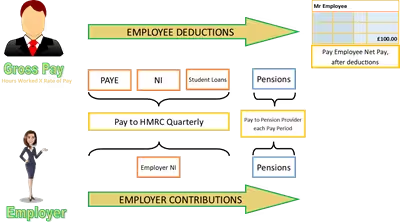
- We process the payroll and send you payslips and an Employer's Summary showing what to pay and what to set aside.
- You pay each employee their net pay, the amount after deductions.
Paying HMRC and Pension Providers
Tax, National Insurance and student loan deductions come out of your employees' pay, but you hold that money until you pay it to HMRC. It isn't yours to spend. On top of it, you may owe Employer's National Insurance, which is paid at the same time.
- HMRC: paid monthly, by the 22nd of the following tax month. If your average monthly payments are under £1,500, you can arrange with HMRC to pay quarterly instead. We'll send you a P30 employer payment summary showing how much to pay, the reference to use and the due date.
- Pension provider: pay your employees' contributions plus your employer contributions by the 22nd of the month after they were deducted.
Holiday Pay
Employees build up paid holiday as they work. There are different ways to calculate holiday pay, so use the one that fits how each person works. Budget for it: it's paid when they take time off, and any untaken holiday is paid out when they leave.
For more, see our New Employer Guide and our payroll services.
How Long to Keep Your Records
HMRC can ask to see your records, so keep them for at least as long as the law requires. Digital copies are fine, as long as they're clear and complete.
Limited Companies
At least 6 years from the end of the financial year they relate to.
Sole Traders
At least 5 years after the 31 January deadline for that year's tax return.
Payroll Records
At least 3 years from the end of the tax year they relate to.
Workplace Pension Records
Generally 6 years, and 4 years for employees' opt-out notices.
Keep records for longer if they relate to something that lasts more than one year (like equipment or a vehicle you're still using), if a tax return was sent late, or if HMRC has opened a compliance check.
Payroll Records to Keep
Most of these are kept in the payroll files we run for you, but you're responsible for making sure they exist:
- What you pay each employee and the deductions you make
- Reports and payments you make to HMRC
- Employee leave and sickness absence
- Tax code notices from HMRC
- Taxable expenses or benefits you provide
- Payroll Giving documents, if you run a scheme
Data Protection
If you hold personal information about customers, suppliers or employees, you may need to pay the ICO data protection fee. Most businesses do. The ICO has an online tool to check, and our guide to the ICO fee explains more.
Key Deadlines at a Glance
Not every deadline applies to every business. We'll confirm your own dates when you join.
| What | When |
|---|---|
| VAT Return and payment | 1 month and 7 days after the end of each VAT period |
| PAYE and National Insurance | 22nd of the following tax month (or 22 July, October, January and April if you pay quarterly) |
| Pension contributions | 22nd of the month after they were deducted |
| P60s to employees | By 31 May each year |
| MTD quarterly updates (sole traders in MTD) | 7 August, 7 November, 7 February and 7 May |
| Self Assessment return and balance due | 31 January after the end of the tax year |
| Self Assessment payments on account | 31 January and 31 July |
| Corporation Tax payment | 9 months and 1 day after the company's year end |
| Company accounts to Companies House | 9 months after the company's year end |
| Company Tax Return (CT600) | 12 months after the company's year end |
| Confirmation statement | At least once every 12 months |
Talk to Us First
A quick question before you act is almost always cheaper than fixing something afterwards. Get in touch before you:
- Take on your first employee, or pay yourself a salary for the first time
- Buy a vehicle, expensive equipment or property for the business
- Take money out of your limited company, other than your usual salary or agreed dividends
- Get close to the £90,000 VAT registration threshold
- Start selling something new, or selling abroad
- Reply to a letter or enquiry from HMRC or Companies House
This guide is general information about UK rules as at October 2026. Tax rules and rates change, and every business is different, so please speak to us about your own circumstances before making decisions.